
Electric scooters are gaining popularity due to their fun driving experience, speed, and convenience as…
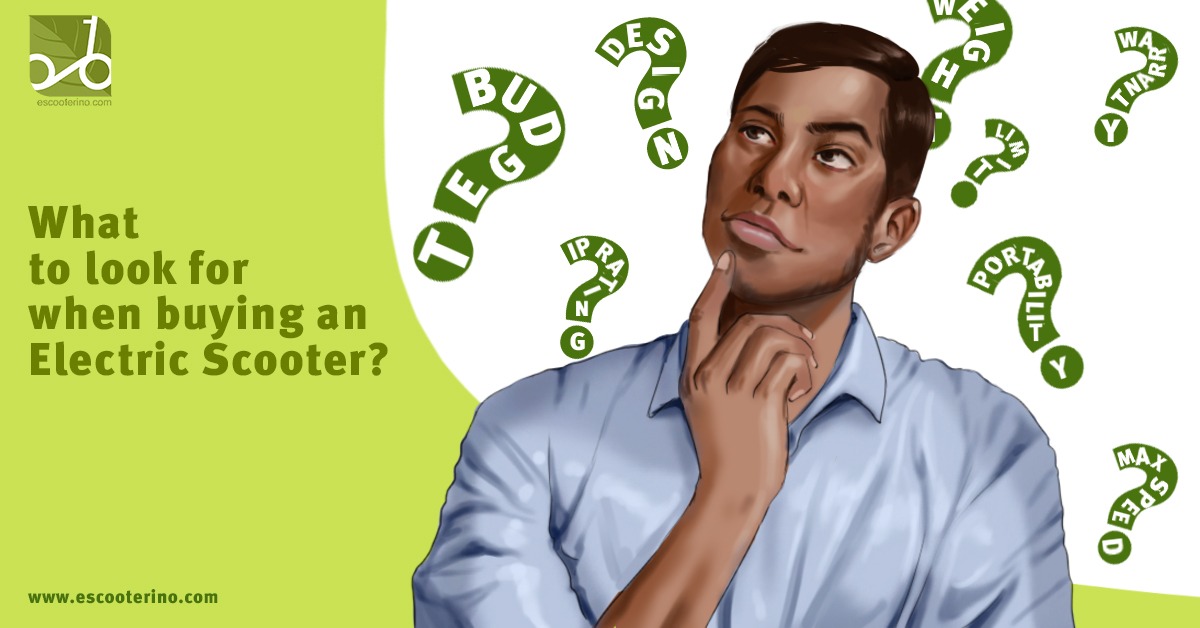
What to look for when buying an electric scooter?
Electric scooters with zero carbon emissions and a reasonable price compared to other mobility vehicles have become extremely popular among the young generation. They are pocket-friendly and your best companion in traffic jams, helping you reach your destination on time without much hazard.
Using electric scooters also allows people to contribute to the Green Revolution. The consumption of electricity is far more economical than conventional gas. Looking at all these benefits, I also purchased an electric scooter. But here is where my struggle started as a beginner. I had no idea what features mattered while buying an electric scooter.
It felt like I was on a roller coaster ride, with too many questions in my mind. Suggestions from friends, colleagues, and neighbours made things even more confusing. I didn’t want to rely on a salesperson to “sell me” a product, so I tested some scooters on my own and spent hours researching. Eventually, I gathered solid information that I wish I had known before buying. That’s why I created this detailed guide, so no one else faces the same confusion.
There are many models available in the market, and the cost is always the first factor. But apart from price, there are major features that should never be ignored when buying an electric scooter.
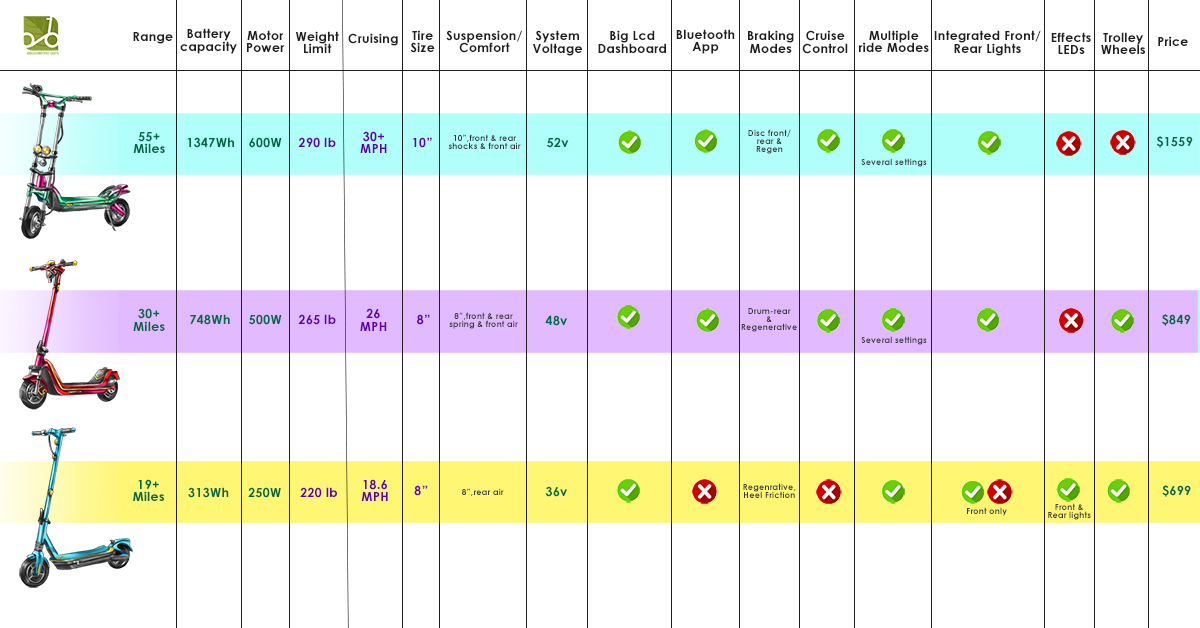
You can easily compare models by reviewing the features below:
- Budget – The Budget decides the quality and number of features in your electric scooter. It typically ranges from $300 to $1500. You must focus on what features you need rather than selecting a scooter only because it “looks cool”. The budget also affects battery life, speed, motor power and frame quality, so always compare value instead of price alone.
- Style and design – Depending on build quality, colour, and convenience features, select the design that matches your personality. A strong frame is more important than appearance if you plan to ride daily or long distances.
- Type of tires – There are two types: solid and air-filled tires. Solid tires require less maintenance and cannot go flat, but have poor traction and ride quality. Air-filled tires provide better comfort and grip but require maintenance and regular pressure checks. Off-road riders should always prefer air-filled tires because they absorb shock better on uneven terrain.
- Size of wheels – Wheel sizes vary from 6 to 16 inches, with 6 inches mainly for kids’ electric scooters. 8.5 inches is ideal for stability, whereas 10 inches and above are generally meant for off-road capability and maximum performance. For city riders in the USA, 8.5-10 inches is considered the sweet spot for comfort and safety.
- Handlebar – Adjusted handlebars allow better control and a comfortable riding position.
- Deck size – Foot space affects posture and comfort during long rides. A wide deck allows a stable riding stance compared to a narrow deck.
- Weight limit – It directly affects speed and range. The weight limit of an electric scooter is mentioned in the user manual and must never be exceeded. Exceeding the limit can damage the suspension, motor, battery, front and rear, and more. If your weight is close to the maximum limit, choose a scooter with at least 20-30 lbs extra margin for best performance.
- Battery capacity – Battery range from 250 Wh to 1200 Wh. A higher capacity battery provides more mileage. For daily commuting in the US, at least 500-700 Wh is recommended if your one-way trip is 8-12 miles.
- Motor capacity – Standard scooters have a single motor, while powerful scooters have dual motors. It starts from 250 watts. For city use, 350-500W is enough; for hills or heavier riders, 600-1000W is recommended.
- LED Light and indicator – Headlights illuminate your path and help you spot obstacles before they affect you. US night-riding laws require front and rear lights in many states.
- Suspension – Suspension absorbs shock and keeps the wheels stable when hitting bumps. It prevents damage to the rims and motor hub. If your daily route has rough pavement or uneven sidewalks, suspension is not optional—it is mandatory.
- Braking system – There are two main types: Disc brake and ABS. Disc brakes are long-lasting, durable, and powerful compared to ABS brakes. Front + rear dual braking systems provide the safest stopping power at higher speeds.
- IP (Ingress Protection) rating – It indicates weather resistance. A high IP rating makes your electric scooter suitable for dusty and rainy regions. For US riders, IP54 or higher is recommended to handle sudden rain.
- Portability – Folding scooters are preferred for riders who need to carry them into a metro, car trunk, office, or apartment.
- Range or mileage – The average range is 35 to 40 miles on a single charge. Choose an electric scooter with a higher range for long commutes. Manufacturers’ claimed range is usually tested in ideal conditions, except for a 15-25% lower range in real riding.
- Maximum Speed Limit – The usual speed range is 15 to 25 mph. The speed can be increased by removing the speed limiter. Removing the speed limiter can be illegal in many US states and may void the warranty.
- Warranty – The warranty varies between 6 months to 2 years. Many companies offer a limited warranty; read the fine print carefully.
- Extra Features – Helmets, chargers, elbow and knee pads, closed-foot shoes, reflective safety gear, etc, offer additional protection against falls or accidents. Also, check whether the scooter has regenerative braking, app-level tracking, cruise control, and theft lock features.
Important questions to think about before purchasing:
- How far will you travel on a regular day?
- Do you need portability for stairs, work, public transport, etc.?
- Will you ride at night or in rough weather?
- Are your roads smooth or full of bumps/potholes?
- Do you need speed, or is comfort more important?
Conclusion – It is highly advisable to check your local laws and regulations before purchasing an electric scooter. Safety comes first, so always wear protective gear. Daily or weekly maintenance increases the lifespan of your electric scooter. Minor issues can be fixed through DIYs, but never replace or modify any internal parts that may void your warranty. Always contact the manufacturer and read the user manual first.
Doing proper research before purchasing saves money, prevents frustration, and ensures you select a scooter that truly fits your lifestyle.

Related Posts
This Post Has 0 Comments