
Electric scooters are gaining popularity due to their fun driving experience, speed, and convenience as…
How fast do electric scooters go
Electric scooters have experienced a surge in popularity over the past few years, ranging from shared rentals zipping through city streets to personal scooters for commuting or leisurely rides. They look sleek, are easy to park and seem like a perfect green alternative to cars. One question always pops up when someone considers buying an electric scooter: “How fast do electric scooters go?
But when it comes to speed, there’s a big difference between what the manufacturer claims and what you actually experience on the road. An e-scooter advertised to hit “up to 30-50 mph” doesn’t always perform that way in daily life.
This article will cover realistic speed ranges for different kinds of scooters. Factors that affect the speed, like battery health, weather, firmware, road surface and more. Up-to-date U.S. regulations for major cities and some personal riding examples, and practical advice.
Here’s a quick breakdown of what riders usually experience, depending on e-scooter type.
| Scooter Type / Use | What’s advertised (peak) | What you’ll likely get in real-world riding |
|---|---|---|
| Shared rental (urban) — companies like Lime, Bird, Spin | 15–20 mph | 10–15 mph (geo‑fenced or speed-limited zones common) |
| Entry-level personal scooters (250–350 W motors) | 15–20 mph | 12–18 mph (good for short urban commutes) |
| Mid-range personal scooters (500–750 W, larger battery) | 20–30 mph | 18–28 mph — depends on rider, load, and conditions |
| High‑performance / Dual‑motor scooters (1000 W+ / high‑voltage battery) | 30–60+ mph (on paper) | 25–50+ mph — but only under ideal conditions, often not legal on public roads |
“Top speed” is typically measured under ideal lab conditions. Like a light rider, a flat surface, fully battery, no wind, no load. Whereas in real-life city riding, there are traffic, stops, and inclines where you’ll likely get 15-30% less.
Different ranges of speed for electric scooters:
- Shared electric scooters are available through companies like Lime, Bird and Spin, and are well-suited for short, mostly urban trips. In most US cities, these scooters have a capped top speed of 12 to 15 mph. It prioritises the rider’s safety and ensures that vehicles are manageable for people of all experience levels.
- Personal electric scooters are designed for individual owners and typically offer a flexible range of speeds. Entry-level models have a speed range between 15 to 20 mph and are ideal for city commuting or nearby rides. These can be the perfect choice for beginners or riders who use scooters for regular travel. The Segway Ninebot Max is one such example.
- Most powerful scooters have a range of speed between 30 to 50 mph or higher. These are also known as high-performance scooters, which can cover long distances or take you on adventurous rides. It is available in the premium range and requires more skills and expertise to ride. The Kaabo Wolf Warrior 11 is one such example.
Speed gives us the advantage of reaching our destination faster. However, we should always remember that those who drive too fast often have less control over the vehicle compared to those who maintain a safe speed or follow the speed limit. We should understand that how fast we drive is not as important as how safely we drive.
Hidden factors that kill speed:
There are subtle, powerful factors that affect ride performance. These determine when your scooter feels fast or sluggish in daily life.
Battery Chemistry and Voltage Sag
- A scooter’s battery voltage directly affects the amount of power delivered to the motor. Higher-voltage batteries (48V, 60V, 72V) generally support higher speeds than lower-voltage ones (24V-36V).
- As the battery discharges (from 100% to 60% to 20%), voltage drops under load, reducing motor power and limiting top speed. Many riders notice scooters slowing down as the battery falls below 50%.
- Over time, battery cells age, internal resistance rises, and they deliver less power under load. That means a “fast” scooter, when new, may become slower after months or years of use.
Thermal Throttling
When the motor and controller heat up (e.g., after repeated accelerations, long uphill rides, or continuous fast travel), many scooters automatically reduce power to protect their hardware. This is called “thermal throttling.”
-
After a long, fast run, you might start at 35–40 mph but slowly see your speed drop to 25–30 mph.
-
Some scooters may feel sluggish until they cool down.
Firmware, Speed Governors and Geo-Fencing
- Shared‑scooter companies and some personal‑scooter manufacturers use software speed governors. That means even if the hardware supports speeds of 30+ mph, the scooter may be intentionally capped at 15–20 mph to comply with city laws or insurance policies.
- Many U.S. cities (and increasingly, insurers) require lower speed limits in certain zones such as sidewalks, parks, downtown districts, and near schools. That means your scooter might automatically slow or even shut off motor assist in those zones.
The impact of tyres, rolling resistance and road surface
-
Low tyre pressure increases rolling resistance — more drag = less top speed & shorter range.
-
Solid (airless) tyres reduce punctures but increase rolling resistance compared to proper pneumatic tyres.
-
Rough surfaces such as uneven concrete, cobblestones, and bricks can reduce speed by 10–30% compared to smooth asphalt. Wet or painted surfaces, or riding over leaf‑covered paths, add friction and further reduce speed.
Rider posture, weight distribution and load
-
Above ~20 mph, aerodynamics matter. A rider leaning forward with knees slightly bent cuts wind resistance vs. standing upright like a lamppost. That difference can give 5–10% extra speed or range.
-
Adding an extra load, such as a backpack, groceries, and a second rider, increases the total mass. The heavier + higher the load, the more power the motor needs — which means top speed drops, acceleration slows, and battery drains faster.
-
Weight distribution matters: leaning forward on hills helps the front wheel maintain traction (better torque); leaning backwards can reduce grip on inclines and make handling sluggish.
These factors are often overlooked, but they make a significant difference.
Weather and Temperature effects – Cold, Heat and Moisture
- Cold weather: Lithium-ion batteries suffer in low temperatures — ion flow slows, internal resistance increases, and output voltage loses efficiency. That means slower acceleration, lower top speed, and shorter range.
- Heat / High temperature: High temperatures decrease battery efficiency and often trigger thermal protection in battery packs, limiting output to prevent overheating.
- Rain or wet roads: Not only is traction reduced, resulting in slower acceleration and cautious braking, but wet surfaces also increase rolling resistance and the risk of slippage, forcing a rider to reduce throttle for safety.
The major factors that can make your electric scooter go faster:
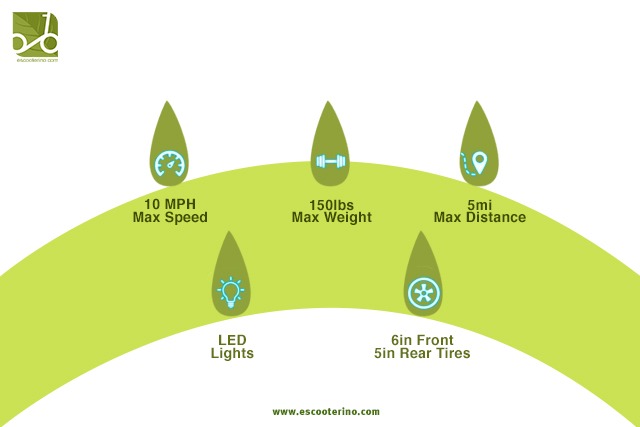
Weight – The weight of the rider and the weight they carry on an electric scooter will affect the speed. For example, if the weight is higher, it causes more stress on the motor, and the battery’s speed will decrease. Similarly, if the rider is lighter, it will simultaneously cause less stress on the motor, and the battery will increase the e-scooter’s speed.
Tyres – The speed and range of the electric scooter depend on the tyres it possesses. Various electric scooters consist of different types of tyres. These tyres vary in size, air pressure and shape. The size of the tyre and motor are correlated, hence the motor is mounted into the scooter’s wheel hub. Tyres with low pressure create more friction, making it difficult for the scooter to reach its maximum speed. Inversely, when there is high tyre pressure, there is an increase in speed and a decrease in friction.
Motor size – Motors are of various sizes. The sizes vary in terms of power and electric consumption. Generally, it is observed that electric scooters with large motors produce more power than those with smaller motors. The size and weight of the motor typically depend on its power level, which ranges from 250 Watts to 1000 Watts.
| Electricity (Watts) | Average Speed (mph) |
| 250 | Close to 15 mph. |
| 350 | Ranges between 15 mph to 22 mph |
| 500 | Ranges between 25 mph to 30 mph |
| 1000 | More than 30 mph |
Note – Motors with high electric capacities often have higher RPM (revolution per minute) and torque.
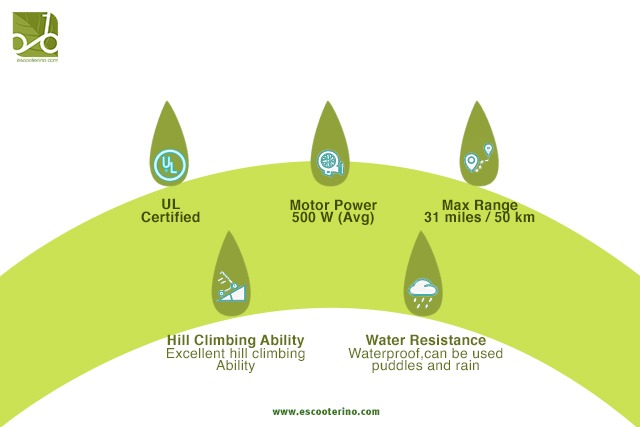
The capacity of the battery – All electric scooters contain lithium-ion batteries, which have a long-lasting battery life with minimal maintenance. Batteries are measured in amp hours (Ah). High ampere hour provides longer mileage. The battery capacity is measured in watt-hours (Wh). As the battery capacity of the electric scooter increases, so does the electric storage capacity of the scooter. This increase in electric storage leads to an increase in range.
Landscape or ground surface – Different road and ground surfaces affect your vehicle’s speed. Free sidewalks may insist you check your scooter’s speed limit. Remember the permitted speed limit and always check your surroundings. The motor and battery work hard to maintain speed, depending on the terrain, such as a flat and smooth one or a steep incline with an uneven surface. In many high-performance electric scooters, a self-designed speed mode program allows riders to adjust their speed and acceleration according to riding conditions and their own skills.
Speed limit – The average speed limit range is 15-30 mph, where 30 mph is intended for high-power electric scooters and 20 mph is designed for average top-speed electric scooters. Whenever the speed increases, there is a high chance of a direct effect on battery charging time and travel distance. It is always advisable to follow the government electric scooter speed limit.
Weather conditions – We often notice that weather conditions also play an important role in affecting the speed of your electric scooter. Mostly, you will observe that in windy and rainy weather, the speed decreases due to resistance, and the motor reaches its maximum speed. On a sunny day, the extreme temperature affects the battery, causing it to be faster and limiting the speed.
How you ride an electric scooter fully depends on your commute; over time, you will develop a habit. My electric scooter generally tops out at 30 mph, depending on the road’s incline and the weather (wind). It only occurs on smooth roads; otherwise, it slows down to 15-25 mph when there is traffic. Please note that tilting at speeds of 35 mph to 40 mph is not advisable. Always check for potholes, blind corners, intersections, road quality, and traffic-free roads, as well as ensure there are no pedestrians or other bikers on the streets to reduce the risk of accidents.
Speed Regulations in US Cities:
| Name of State | Speed Limit |
| Colorado | 30 mph |
| California | 15 mph |
| Chicago | 15 mph |
| Arkansas | 15 mph |
| Connecticut | 20 mph |
| Washington DC | 10 mph |
| Georgia | 20 mph |
| Illinois | 20 mph |
| Lowa | 20 mph |
| Louisiana | 25 mph |
| Maine | 20 mph |
| Maryland | 20 mph |
| Massachusetts | 20 mph |
| Michigan | 45 mph |
| Mississippi | 15-20 mph |
| Missouri | 30 mph |
| Nevada | 20 mph |
| New Jersey | 19 mph |
| New York | 30 mph |
| North Carolina | 30 mph |
| North Dakota | 30 mph |
| Ohio | 20 mph |
| Oklahoma | 35 mph |
| Oregon | 24 mph |
| Tennessee | 20 mph |
| Utah | 15-25 mph |
| Virginia | 20 mph |
| Minnesota | 15 mph |
Enhance Safety at Different Speeds:
Here are some useful tips to help you stay safe while riding an electric scooter at different speeds:
- If you are a beginner, it’s best to start with models that have a speed range of 15 mph. Soon, you will be accustomed to the controls and the scooter handling. Once you gain the experience, you can switch to faster models that allow higher speeds.
- Always follow and check your local regulations before purchasing or riding an electric scooter, as speed limits vary from city to city. You will also be protected from any fines and accidents.
- Electric scooters often share space with pedestrians, bicycles and cars, so it is important to be aware of your surroundings. Better to slow down at crowded places, signals, and turning points.
- It is crucial to wear a helmet at any speed. Protective gear, such as gloves, elbow pads and knee pads, is additional for riding at higher speeds. Falling at a slower speed can also cause serious injuries. Hence, precautions are a must.
Speed-focused checklist:
Before you buy, check these to get realistic expectations:
-
Battery voltage & configuration: 48 V, 60 V, 72 V packs deliver better speed and torque than 36 V. Higher voltage generally results in a higher potential top speed (if the controller and motor support it).
- Motor rating (Wattage) and controller specs: Even with high voltage, a weak motor or low-current controller will limit speed -peak vs. nominal watt rating matters.
- Tyre type & recommended pressure: Pneumatic tyres at the correct PSI provide better speed, comfort, and range.
- Battery health & BMS quality: For used scooters, especially — test how voltage holds under load. Bad/old battery = poor performance
- Firmware/speed governors: Ask if the scooter is software‑limited. A 1000 W motor won’t matter if speed is capped electronically at 15–20 mph.
- Local laws & riding routes: If you ride in a city, check geo‑fencing zones, public road allowances, and speed limits.
- Intended use (commute/hills/long distance/fun): For commuting on flat roads, mid-range scooters may be sufficient. For hills, heavy loads, or longer rides, consider higher voltage and dual‑motor setups (where legal).
Electric Scooter Maintenance:
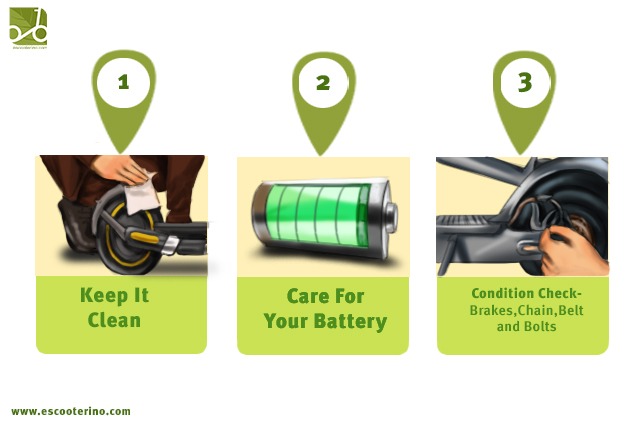
- Clean the scooter.
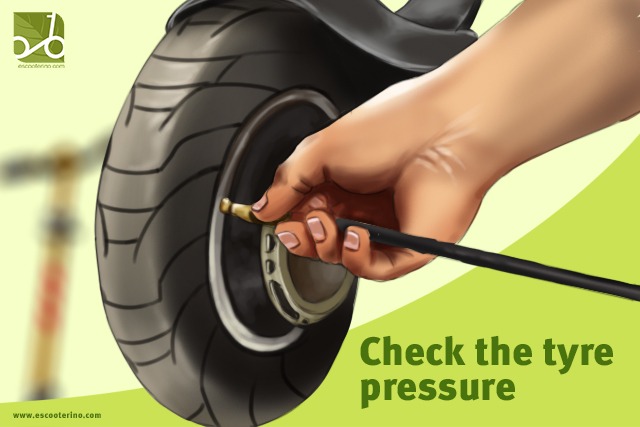
- Maintain proper tyre pressure and check weekly.
- Keep the battery charged and healthy. Avoid constantly draining to 0% or always charging to 100%. Lithium-ion packs perform best in the mid-range and age more slowly with care.
- Avoid constant full-throttle starts — gradual acceleration prolongs motor and battery life, reduces heat.
- Avoid long hill climbs or extended high-speed runs without breaks — thermal throttling and battery stress increase.
- Keep firmware updated, but verify whether updates change speed/acceleration behaviour.
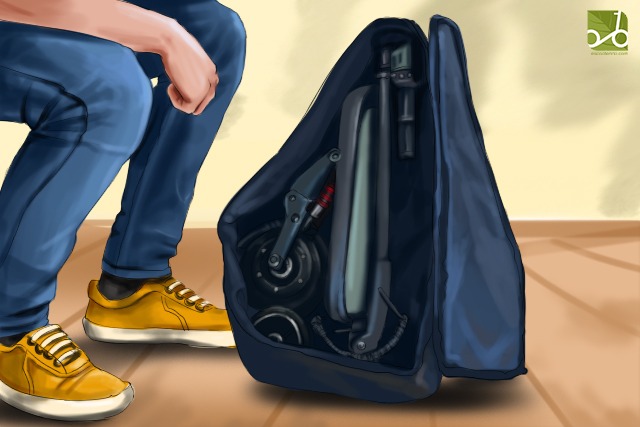
- Store the electric scooter properly
- Ride with appropriate protective gear — including a helmet, gloves, and pads — especially at high speeds.
Conclusion
These factors will help you choose the right electric scooter to suit your needs, and regular maintenance will keep its speed and efficiency for a long period. Whenever you purchase a fast-paced electric scooter, always check that it has a proper braking and motor system, handlebars, stability, a strong, sturdy build, and so on.
Disclaimer
My motto is not to support high-speed; it is simply a sharing of knowledge. Speed brings full excitement and fun, but it also welcomes risk. The higher the speed, the more safety gear you need, such as a helmet, gloves, elbow and knee guards, closed-toe shoes, and so on.

Related Posts
This Post Has 0 Comments